Office Clearance in Golders Green
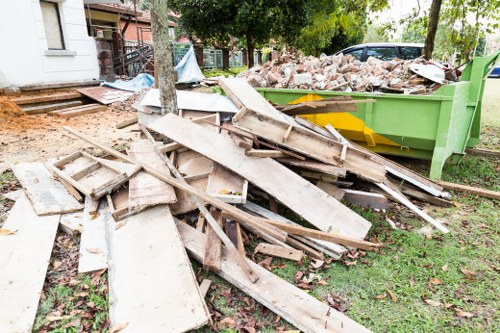
Office clearance in Golders Green should feel organised, discreet and straightforward, whether you are emptying a single room, refreshing a shared workspace or preparing a full floor for handover. We provide a practical clearance service that focuses on separating reusable items, removing general office contents and dealing with bulky materials in a sensible, structured way. The aim is to leave the space ready for its next stage with as little disruption as possible.
Our service covers the removal of desks, chairs, storage units, filing cabinets, reception furniture, mixed office waste and unwanted equipment that has reached the end of its useful life. We handle the clear-out side of the job so you can concentrate on the move, refurbishment or closure that sits around it. If you need a clearer route through the process, start by reviewing the main service details and then request a quotation when you are ready.
Depending on the make-up of the premises, we can deal with one-off removals or phased clearances that allow departments to be tackled in sensible stages. That can be useful where the site remains partially occupied, where items need sorting before removal, or where access must be managed carefully. Office clearance details explain the service in more depth, while our approach always stays centred on practical removal, tidy working and responsible handling of the materials collected.
How the clearance is planned

A well-run office clearance starts with understanding what needs to go and what must stay in place. Furniture, archive storage, IT-related items, fixtures and general rubbish may all be involved, but they rarely require the same handling. By separating these items in advance, the clearance can move more efficiently and the right disposal route can be chosen for each category. That helps avoid delay and keeps the work focused on the actual contents of the office rather than on guesswork.
The process is usually simpler when the space is described clearly from the outset. A short outline of the rooms involved, the type of items present and any access considerations gives a better basis for planning than a broad statement alone. If the site has lifts, loading restrictions, narrow corridors or shared access points, those details are worth flagging early. It is also helpful to note whether the office contains breakable items, lockable cabinets or materials that should not be mixed together.
For many customers, the most useful first step is to list the principal items that need removing and then decide which are likely to be reused, relocated or cleared. If you are unsure how much of the existing furniture can realistically be retained, a prompt conversation can help set expectations. When you are ready, simply ask for a quotation and include enough detail for the removal work to be understood properly.
Furniture, desks and everyday office contents

Much of an office clearance involves standard workplace furniture: desks, tables, meeting chairs, shelving, pedestal units and filing storage. These items can be awkward to move in bulk, especially when they have been assembled in place or arranged around fixed features. A careful clearance plan helps reduce handling problems and keeps circulation routes usable while the work is underway. It also makes it easier to identify what can be removed whole and what may need to be broken down before collection.
Reception areas, shared work zones and meeting rooms often contain mixed contents that benefit from a more selective approach. Decorative furniture, screens, cupboards, small tables, soft seating and casual storage pieces may all need different treatment. We can remove the contents in a way that suits the layout of the premises, helping to avoid unnecessary disturbance to adjoining rooms or other occupied parts of the building. Where there is a mixture of furniture types, the work can be arranged in a sequence that keeps the job practical.
The same service can also be used for a partial refresh, not just a full closure. If you are updating a workspace and only certain pieces need to go, the clearance can focus on the outdated furniture while leaving the rest untouched. That makes it easier to clear space for new layouts, replacement pieces or a different working arrangement. For a broader overview of the service, the office clearance page gives a useful starting point.
Equipment, fixtures and specialist items
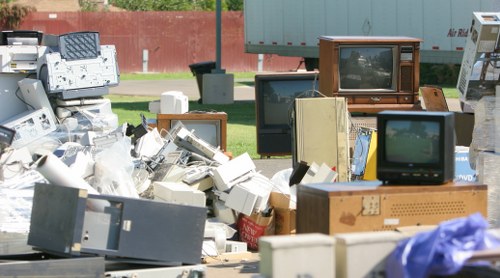
Office environments often contain more than desks and chairs. Cabinets with contents, shelving systems, small appliances, reception fittings and other fixed or semi-fixed items may form part of the clearance too. These pieces usually require a more considered approach than simple loose waste because they can be heavier, more awkward or more sensitive to handling. The work needs to be organised so that removal is safe, efficient and consistent with the room layout.
Where equipment is involved, it helps to separate what is to be removed from what will remain on site. That is especially relevant when multiple departments share one premises, or when a business is leaving behind certain operational items while taking others away. If there are sensitive materials, lockable storage units or items that need to be kept apart from the general clearance load, these points should be identified before the work starts. Clear instructions make the removal easier to manage and less likely to create confusion.
Office clearance can also support a clean handover when the site is being returned to a landlord or prepared for refurbishment. In that context, the emphasis is usually on removing all redundant contents and leaving the rooms ready for whatever comes next. If your job includes a mixture of furniture, equipment and general contents, we can shape the clearance around that blend rather than forcing it into a one-size-fits-all process. If you already know the broad scope, pricing and quotes is a helpful next stop.
Business waste and general removal

Some office clearances involve more than reusable furniture. Mixed business waste can accumulate through a move, a reorganisation or the end of a tenancy, and it may include packaging, paper, broken items and day-to-day refuse that is not part of the office fit-out itself. Our service can incorporate those materials alongside the larger clearance items, giving you one organised removal rather than several separate arrangements. That is often the simplest way to bring a room back to a manageable state.
Business waste removal is relevant when the contents include ongoing operational waste as well as furniture or equipment. In practice, that can mean mixed loads that need sorting before collection and disposal. Keeping those streams organised matters because it helps ensure the right handling route is used for each item type. It also means the clear-out can stay focused on the site itself instead of becoming a series of disconnected collections.
There are situations where office clearance and general removal overlap closely, particularly in small premises, storage rooms or back-office areas. In those cases, a sensible plan is to identify the core furniture, the removable contents and the waste that should go with them, then clear the area in a logical order. For an overview of what can be taken away, the waste removal page can be a useful reference before you decide how best to proceed.
Where office clearance is especially useful
Office clearance is not only for major relocations. It can be useful when a company is reducing the number of workstations, converting rooms to a new use or emptying areas that have become cluttered over time. It also helps where records, redundant chairs and surplus storage have built up and are preventing the space from being used well. In each case, the goal is to remove what is no longer needed without creating additional disruption for the remaining operation.
Some offices need a partial clearance because only one department, suite or meeting area is being changed. Others require a more complete removal because the business is moving out altogether. The service can be shaped around either scenario. If the job is being done in stages, a phased approach can keep the process manageable. If the premises need to be emptied in one pass, the clearance can be organised around the available access, the volume of items and any time restrictions on site.
Practical preparation usually means giving a clear picture of the contents and the access conditions. Photographs can be helpful if they show the rooms accurately, but a plain written description still matters because it explains what is being removed and what remains. One clear note about the load type, the number of rooms and any obstacles is often more useful than a long list of assumptions. Good information leads to a better plan, and that in turn supports a smoother clearance.
About Golders Green
Golders Green is a well-known district in north-west London, within the London Borough of Barnet, shaped by its position around Golders Green Road and its connections to Hampstead, Cricklewood and Finchley. The area is closely associated with the development of transport in the late nineteenth and early twentieth centuries, particularly the arrival of the Underground, which helped turn what had been a more rural fringe into a busy suburban centre. Golders Green station, on the Edgware branch of the Northern line, remains one of the district’s defining transport links and has long influenced the pattern of local shops, homes and movement through the area. The neighbourhood also contains a mix of residential streets, commercial parades and community buildings that reflect different periods of growth, from interwar housing to later infill and redevelopment. One of its best-known green spaces is Golders Hill Park, a landscaped park adjoining Hampstead Heath with gardens, a small zoo area and open lawns, giving the district a strong connection to wider north London parkland. Nearby, the West Heath and the broader expanses of Hampstead Heath add to the landscape character of the area, while the local street pattern still reveals its suburban evolution. Golders Green is also recognised for its cultural life, especially the presence of long-established Jewish institutions, kosher food shops and community facilities that have helped shape the district’s identity over many decades. The result is a place that combines transport convenience, varied architecture and a strong local character, with busy high-street activity alongside quieter residential pockets.
Managing access, timing and building rules
Clearances in occupied or shared premises often depend as much on planning as on lifting and loading. Access routes, lift use, reception arrangements and building rules can all influence how the job is carried out. A sensible plan takes these issues into account before the removal begins, reducing the chance of delays on the day. If the building has quiet hours, loading restrictions or a requirement to protect communal areas, those details should be built into the arrangement from the start.
It is also worth thinking about the order in which rooms are tackled. Clearing an office in a logical sequence can help preserve working areas, reduce backtracking and keep staff movement safe if part of the premises remains in use. This is one reason why a staged approach can be appropriate for larger or busier sites. If the office is empty, the work may simply move more quickly from room to room; if not, the process can be adapted so that essential areas are not disrupted unnecessarily.
contact us when you are ready to discuss the layout, access and type of clearance you need. That simple first step makes it easier to match the work to the site and the schedule. If you already know the rough scope, you can request a quotation with the main rooms and item types listed clearly. Quotation guidance can also help you understand how the enquiry will be assessed.
Furniture disposal and responsible handling
Not every item removed from an office is reusable, and some pieces are simply ready for disposal. Damaged chairs, worn storage units, broken tables and outdated fittings may all need to leave the premises as part of a clear-out. When that happens, the removal needs to be organised in a way that keeps useful items separate from materials destined for disposal. That distinction helps keep the service tidy and avoids mixing different kinds of load unnecessarily.
Furniture disposal is a relevant part of many office clearances because furniture often makes up a large share of the volume. The practical challenge is less about the number of pieces and more about how they are handled, moved and sorted once removed. A responsible approach considers the condition and type of each item, then uses an appropriate route for the material. For businesses that need a broader removal as well, furniture clearance provides a related option where the emphasis is on removing a larger set of items together.
Where furniture is still usable, the clearance may be planned to keep it distinct from the items that are due to be disposed of. That kind of sorting can be especially helpful in refurbishments or relocations, where only some of the existing fit-out is being replaced. The clearer the categories, the easier it is to move the right items away in the right way. If you want to understand the wider disposal and handling approach, the recycling and sustainability page offers further information.
Other related clearance work
Although office clearance is our central service here, there are occasions when adjacent clearance needs appear at the same time. Storage areas, cupboards and ancillary rooms may contain domestic-style items, archive material or other mixed contents that sit alongside the office furniture. In those cases, a broader clearance plan can help avoid the frustration of arranging separate removals for parts of the same site. The key is to identify the contents honestly and treat each category with the right level of attention.
Home clearance may be relevant where a business operates from a mixed-use property or where certain items have a household rather than workplace character. Similarly, flat clearance can be useful in premises that include domestic accommodation or rooms with a residential setup. Those pages describe related forms of clearance rather than a different promise, and they can help you decide how best to classify the items before arranging the work.
For larger loads or spaces that have become heavily filled over time, it can also be helpful to consider whether a wider removal approach is needed. In that situation, the task is not just to empty one desk area but to clear the room in a controlled and usable way. A concise description of the contents, the rooms involved and the expected outcome gives the clearest basis for planning. Tell us what needs to go, and we can shape the clearance around that information.
Getting a quotation for your office clearance
To prepare a quotation, the most useful information is a clear outline of the rooms, the main item types and any practical access details. If you can note whether the job involves desks, chairs, cabinets, equipment, rubbish or a combination of these, it is easier to assess the likely scope. That does not need to be a long description; it simply needs to be accurate enough for the removal work to be understood sensibly.
A quotation is often more straightforward when the clearance is described in practical terms rather than broad labels. For example, it helps to know whether the job is a partial clear-out, a full office emptying or a staged removal with different areas tackled at different times. If there are special constraints such as lifts, narrow stairways, restricted loading or items that should stay separate, those should be mentioned too. A well-prepared enquiry leads to a more useful response.
If you are ready to move ahead, use the contact page to start the quotation process. You can also revisit office clearance for the main service overview before sending your details. For businesses comparing the likely scope with other removal needs, the business waste removal page can help place the job in context. Request a quotation when you have the essentials to hand.